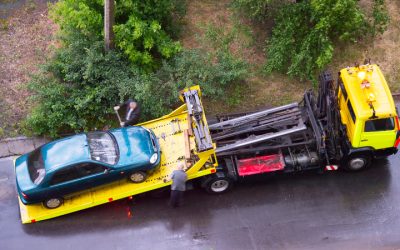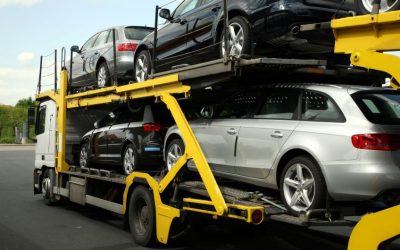




When a bus experiences an air-brake system failure, it may become immobilized because its spring brakes apply automatically as air pressure drops. Safe bus towing requires the brake condition, vehicle weight, passenger status, wheel movement, and location to be evaluated before the bus is moved.
An air-brake failure can affect transit buses, school buses, motor coaches, shuttle buses, and other large passenger vehicles. Because these vehicles vary in size and mechanical configuration, the towing plan must be based on the specific bus rather than a standard procedure.
How Does an Air-Brake System Work on a Bus?
An air-brake system uses compressed air to control braking. An engine-driven compressor builds pressure, while reservoirs store the air needed to operate the service brakes and other connected systems.
The driver monitors the system through dashboard gauges and warning indicators. If pressure drops below a safe operating range, visual and audible warnings may activate. Continued pressure loss can cause the spring brakes to engage, helping prevent the bus from moving without adequate braking capability.
Air pressure may be lost because of a damaged hose, leaking fitting, failed compressor, faulty valve, or another mechanical problem. Identifying the precise failure is the responsibility of a qualified repair technician. The towing operator’s immediate concern is understanding how the failure affects safe vehicle movement.
What Should the Driver Do When Air Pressure Drops?
A driver who receives a low-air warning should follow the vehicle operator’s procedures and stop in a safe location when possible. Continuing to operate the bus can reduce braking control and create a more difficult roadside situation.
Once stopped, the driver should turn on the hazard lights and notify dispatch or the appropriate transportation coordinator. If the bus is carrying passengers, their safety becomes the first priority.
Passengers may need to remain aboard temporarily or transfer to another vehicle depending on the bus’s location, traffic exposure, weather, and instructions from emergency personnel. They should not stand near active traffic or the area where towing equipment will operate.
The driver should not attempt to bypass or release the spring brakes without appropriate training and authority. Improper handling can allow a heavy vehicle to move unexpectedly.
Why Can an Air-Brake Failure Complicate Bus Towing?
A bus with engaged spring brakes may have wheels that will not rotate freely. Pulling it without addressing this resistance can damage tires, brake components, axles, or the road surface.
The towing operator must determine which wheels are locked and whether the bus can be safely repositioned. The operator also considers the drivetrain, steering system, ground clearance, overhang, and approved attachment points.
Buses are often longer than commercial trucks with similar weight ratings. Their front and rear overhangs can create clearance problems when entering driveways, crossing changes in road grade, or making tight turns. These factors remain important even after the brake issue has been managed.
What Information Should Be Given to Dispatch?
Detailed information allows towing services to prepare equipment suited to the bus and its location. The caller should identify the vehicle as precisely as possible instead of reporting only that a bus has broken down.
Important details include:
- The bus type, make, model, and approximate length
- Whether it is a transit bus, school bus, shuttle, or motor coach
- The number and location of its axles
- Whether passengers are still aboard
- The air-pressure reading and warning indicators
- Whether the spring brakes have engaged
- Which wheels appear unable to rotate
- The vehicle’s exact location and direction
- Nearby overhead or side-clearance restrictions
- The intended repair or storage destination
Photos may help dispatch understand the bus’s position, surrounding traffic, road grade, and available working space.
How Is the Appropriate Towing Equipment Selected?
Equipment selection depends on the bus’s weight, axle configuration, body design, and mechanical condition. A small shuttle bus may require a different towing setup from a full-size transit bus or motor coach.
The towing operator must confirm that the equipment has enough lifting and towing capacity for the vehicle. Attachment points must also be selected carefully because body panels, bumpers, and low-mounted components are not necessarily designed to support towing forces.
Wheel movement is another key consideration. If the brakes remain engaged, additional steps or support equipment may be needed before the bus can be repositioned. Professional bus towing accounts for both the bus’s physical size and the condition preventing it from moving.
How Are Passengers and Luggage Managed?
Passengers generally need alternative transportation before a disabled bus is towed. This keeps them outside the recovery area and prevents their weight and movement from affecting the vehicle during hookup.
For a school bus, the driver and transportation provider should follow their established student-transfer and supervision procedures. A transit agency or private operator may send another bus to continue the route.
Motor coaches and shuttle buses may also carry luggage in lower compartments or rear storage areas. The carrier should determine whether luggage remains secured or needs to be transferred. Dispatch should be told if cargo has shifted or if a compartment cannot close properly.
How Do Phoenix Conditions Affect Emergency Towing?
Phoenix presents several practical challenges for emergency towing. Multilane freeways, high traffic speeds, narrow shoulders, downtown streets, and extreme temperatures can affect both passenger safety and equipment access.
A disabled bus on Interstate 10 or Interstate 17 requires a different response from one stopped at a transit center, school, hotel, or private facility. The caller should provide the direction of travel, nearest exit, cross streets, route number, or a map pin.
Extreme heat can also make waiting inside a bus uncomfortable if the engine and air conditioning are no longer operating. Transportation coordinators should arrange passenger transfer promptly while keeping people away from traffic and towing equipment.
What Happens After the Bus Is Prepared for Towing?
Once the brake condition, wheel movement, and connection points have been evaluated, the bus can be secured for transportation. The operator checks the towing connection, lighting, ground clearance, steering position, and loose exterior components before moving.
The route to the destination may also need review. Low-clearance entrances, sharp grade changes, narrow gates, and tight turns can present difficulties for a long vehicle under tow.
The repair facility or storage location should have enough space to receive the bus. Confirming access in advance can prevent delays after transportation begins.
Request Help for a Bus With Air-Brake Failure
An air-brake failure requires a controlled response that protects passengers, the bus, and other road users. If a bus becomes disabled in Phoenix, contact an emergency towing provider with the bus specifications, passenger status, brake condition, location, and destination. Accurate information helps the responding operator prepare suitable equipment and move the vehicle without placing unnecessary stress on its brakes, wheels, or body.