



Roofing fasteners are small components with an important responsibility. They secure shingles to the roof deck and help each row remain in place as the system faces wind, heat, and changing temperatures. For fasteners to work correctly, they must be placed in the designated area and driven to the appropriate depth.
An overdriven fastener is pushed too deeply into a shingle. Instead of resting flush against its surface, the fastener head compresses or breaks through the material. This may weaken the attachment point even though the shingle initially appears secure.
Understanding why overdriving happens can help Peoria homeowners appreciate the precision required when asphalt shingles are installed or repaired.
What Is an Overdriven Roofing Fastener?
A correctly installed roofing nail has a head that sits flat against the shingle without cutting into it. The head holds the material firmly while preserving the strength of the shingle around the opening.
An overdriven nail sinks below the surface. In mild cases, it may create a noticeable depression. In more severe cases, the nail head can tear through part of the shingle’s reinforcement or pass almost entirely through the material.
Once the surrounding area is damaged, the fastener may no longer provide the intended holding power. The nail remains attached to the deck, but the shingle can move around or separate from that attachment point.
Why Do Fasteners Get Driven Too Deeply?
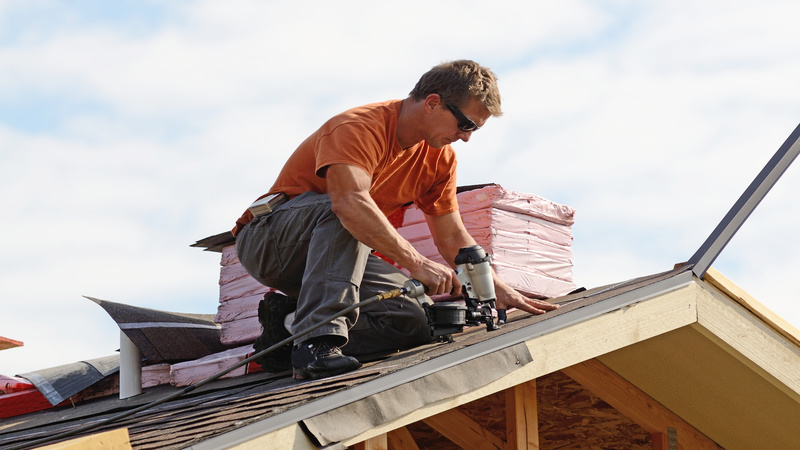
Pneumatic roofing tools allow roofers to place fasteners efficiently and consistently. However, air pressure and tool depth must be adjusted for the materials and conditions on the roof.
Excessive pressure can drive nails too far. The condition and density of the decking may also affect how deeply a fastener enters. A setting that works in one area may produce different results where the underlying surface is softer.
Tool angle matters as well. A nail driven at an angle can leave one side of its head cutting into the shingle while the other side remains raised. Fast work without checking fastener depth can allow the same problem to continue across multiple rows.
How Does Overdriving Weaken a Shingle?
An asphalt shingle contains a reinforcing mat that helps it maintain its shape and resist tearing. Driving a fastener too deeply can damage or puncture this layer around the nail head.
The fastener then loses some of its ability to hold the shingle against upward movement. During windy conditions, the shingle may flex around the weakened point. Repeated movement can enlarge the opening or contribute to tearing.
Overdriven nails can also create small depressions where moisture may collect. If the nail head has passed through the shingle, the intended overlap and attachment pattern may no longer function as designed.
Why Does Fastener Placement Matter?
Depth is only one part of proper fastening. Shingle manufacturers identify a specific nailing area where fasteners should be installed. This zone is designed to hold the correct portions of overlapping shingles while avoiding vulnerable edges.
A nail placed too high may fail to secure the shingle beneath it. A nail positioned too low may remain visible or interfere with the sealing area. Even a flush fastener can perform poorly when installed outside the intended location.
Careful placement during a residential roofing installation helps the shingle courses work together as a coordinated system rather than as separate layers.
Can Overdriven Fasteners Be Seen From the Ground?
Most overdriven nails are hidden beneath overlapping shingle rows. Homeowners are therefore unlikely to identify them through an ordinary ground-level observation.
Possible effects may become visible later. Affected shingles may lift, crease, shift, or detach. However, those conditions can have several causes, so their appearance does not prove that overdriven fasteners are responsible.
A closer evaluation may require carefully lifting selected shingle edges. This should be performed without tearing seal strips or damaging surrounding materials. Walking on the roof without appropriate experience can create additional concerns.
Can Sealant Correct an Overdriven Nail?
Applying sealant over the nail does not restore the strength of a damaged attachment point. Sealant may help manage moisture in certain details, but it cannot rebuild a torn shingle mat.
The appropriate roof repair depends on the extent and location of the problem. An isolated fastening error may require a properly placed replacement fastener and careful treatment of the original opening. A shingle that has torn, creased, or lost its ability to lie correctly may need to be replaced.
If overdriving occurred repeatedly across a broad area, addressing individual nails may not be practical. The surrounding roofing should be evaluated before the scope of work is determined.
What Happens During a Professional Evaluation?
Roofing professionals can examine lifted or displaced shingles, attachment patterns, fastener depth, nail angle, and decking conditions. They may also determine whether the problem is isolated or repeated across several slopes.
The evaluation should consider other possible causes of shingle movement, including incorrect nail placement, insufficient fastening, deck deterioration, and surface damage. Identifying the actual source helps prevent an unrelated symptom from being treated as the main problem.
When Could Overdriving Affect Roof Replacement Decisions?
A few overdriven nails do not automatically require roof replacement. Localized problems may be corrected when the surrounding shingles and deck remain serviceable.
Widespread fastening errors present a different situation. If numerous shingles have weakened attachment points, repairing each one may disturb a significant portion of the roof. The system’s age and overall condition also influence the decision.
Residential roofing depends on many small details working together. Fasteners may be largely invisible after installation, but their depth, angle, and placement affect how securely shingles remain attached. Careful fastening helps the finished roof perform as intended throughout Peoria’s demanding conditions.