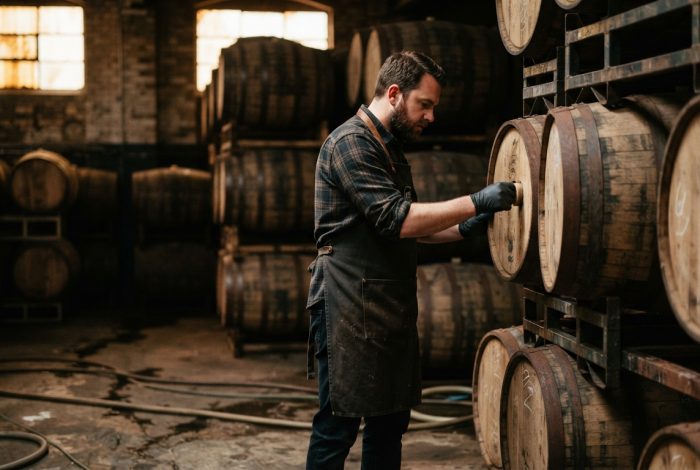
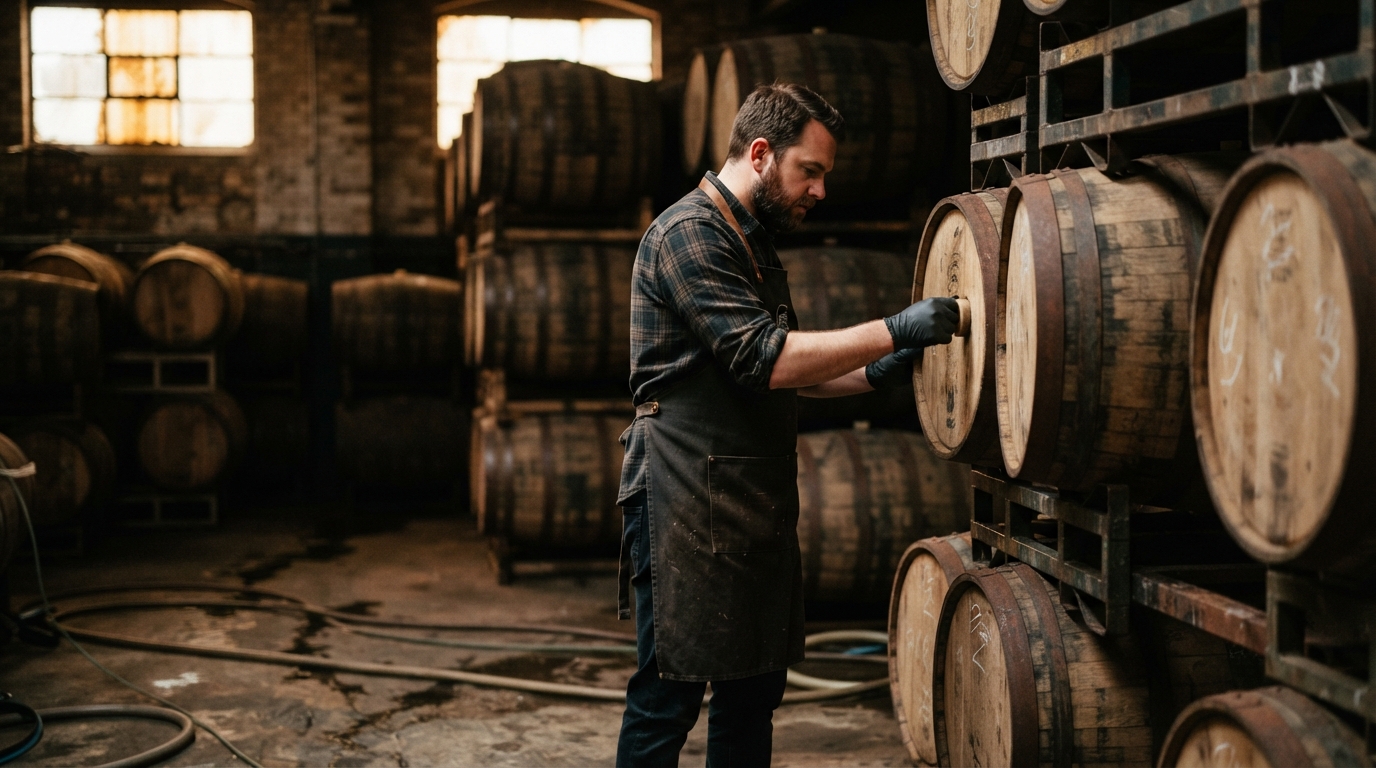
• Barrel aging transfers beer into previously used wood vessels such as bourbon, rum, or brandy barrels, where it develops flavor over months or years.
• Styles, aging times, and barrel sourcing vary widely among breweries that run dedicated barrel programs.
• Readers in Anchorage, AK can find barrel-aged releases produced at a production brewery based in Palmer, AK.
Barrel-aged beer refers to beer stored in oak barrels, usually ones previously used for spirits like bourbon, rum, or brandy, so the beer absorbs residual wood and spirit character over an extended resting period. The process trades speed for complexity, and the resulting beers typically carry higher alcohol content, deeper color, and flavor notes such as vanilla, caramel, or oak tannins that standard fermentation cannot produce on its own.
A Barrel Aged Beer Brewery builds this process into a long-term production cycle rather than a one-off batch. Barrels are sourced, filled with a base beer suited to extended aging, and then monitored over months or years before release. The beer inside continues to change as oxygen slowly interacts with the wood, softening harsh edges while adding complexity that a fresh, unaged beer cannot replicate.
How the Process Actually Works
Brewing a barrel-aged beer starts well before the barrel is ever filled. The base beer is typically a high-gravity style, since stronger beers hold up better to months or years of oxygen exposure and wood tannins.
1. Selecting barrels previously used for bourbon, rum, whiskey, or brandy, since the residual spirit soaks into the wood grain and transfers into the beer.
2. Filling barrels with a high-alcohol base beer, often an imperial stout, barleywine, or doppelbock built to withstand extended aging.
3. Resting the beer in barrels for one to several years, checking periodically for flavor development and contamination risk.
4. Bottling or kegging once the brewer determines the beer has reached its intended balance of oak, spirit, and malt character.
One documented program illustrates how long this commitment can run. According to information published by the brewery, the Matanuska Barrel Aging Program began with the 2021 vintages but has roots going back another quarter century, started in 1996 when the brewery’s Master Brewer developed an interest in coopering and barrel aging. That same source notes the brewery maintains fifty plus barrels of special high octane beers.
Styles Commonly Found in Barrel Programs
Not every beer style is suited to barrel aging. Brewers generally reserve the process for beers with enough malt backbone and alcohol strength to balance the wood and spirit influence.
|
Base Style |
Typical Barrel Type |
Aging Length |
|
Imperial Stout |
Bourbon |
One to two years |
|
Barleywine |
Bourbon or Brandy |
One to two years |
|
Doppelbock |
Bourbon |
Two years |
|
Imperial Porter |
Bourbon |
One year |
Published tap room documentation describes examples such as a stout aged one year in Bourbon Barrels with dark, roasty, smooth chocolate flavors and an imperial stout aged two years in Elijah Craig 10 Year Bourbon Barrels. Beers in this category follow classification standards used across the craft industry, including the Brewers Association beer style guidelines, which define wood- and barrel-aged beer as any traditional or experimental style of lager, ale or hybrid beer aged in either a wooden barrel or in contact with wood.
Why Timeframes and Barrel Sourcing Vary
Aging length depends on the barrel’s prior contents, the beer’s starting gravity, and how much oxygen exposure the brewer wants. A thinner-bodied beer aged too long can turn overly woody or oxidized, while a heavier stout may need a full year or more just to absorb enough spirit character to balance its roast and malt.
• Spirit barrels (bourbon, rum, whiskey) impart the most pronounced residual flavor.
• Wine or brandy barrels tend to add fruitier, more tannic notes.
• Barrel age and prior fill count affect how much flavor transfers versus how much wood character dominates.
Business Info
Learn More About Matanuska Brewing Company operates as a production brewery and restaurant. Public information describes it as a production brewery and restaurant established in 2017 that offers a variety of beverages including West Coast-style beers, barrel-aged options, hard seltzers, canned cocktails, and sodas. Based in Palmer, AK, the brewery’s output reaches customers across Anchorage, AK, consistent with its description as a brewery crafting boldly Alaskan beers, seltzers, ciders, and cocktails at a production brewery and restaurant in Palmer, serving Anchorage, Alaska.
Frequently Asked Questions
How long does barrel-aged beer typically age? Based on documented releases, aging periods commonly range from one to two years, depending on the base beer’s strength and the barrel type used.
What makes barrel-aged beer different from a regular craft beer? The extended time in oak barrels, often ones previously used for bourbon or other spirits, introduces flavor compounds like vanillin and tannins that standard fermentation and conditioning cannot create.
Can any beer style be barrel aged? Higher-gravity styles such as stouts, barleywines, and doppelbocks are most commonly used because their malt backbone and alcohol content hold up better to long resting periods.
Where are barrel-aged beers from this program available? Beers produced at the Palmer, AK facility are distributed to retail and tap locations serving the Anchorage, AK area.
A Note on Finding Current Releases
Barrel programs rotate through limited releases as each vintage finishes aging, so availability changes throughout the year. Current details for Learn More About Matanuska Brewing Company are published for reference by anyone tracking seasonal barrel-aged releases.