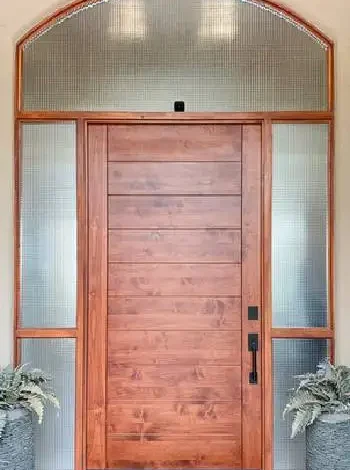

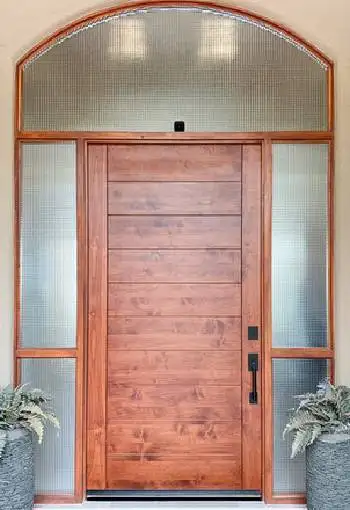
A front door threshold affects everyday entryway use by creating the transition between outdoor and indoor flooring while helping manage water, air leakage, and the door’s bottom clearance. Its height, shape, material, and relationship to surrounding surfaces can influence how comfortably people enter a home, move items through the doorway, and maintain the entrance over time.
Although homeowners often concentrate on door panels, hardware, and decorative details, the threshold is a functional component of the complete entrance.
For homes in Phoenix, Arizona, threshold selection deserves attention because entryways experience frequent foot traffic, seasonal dust, occasional heavy rainfall, and substantial temperature differences between indoor and outdoor environments.
Understanding how thresholds work can help homeowners make more informed decisions when selecting residential entry doors or replacing an existing entrance.
What Is a Front Door Threshold?
A front door threshold is the component positioned along the bottom of a doorway, typically where the door meets the floor.
It forms the transition between the interior flooring and the exterior landing, porch, or walkway.
The threshold works alongside the door’s bottom seal, frame, and surrounding construction to support everyday operation.
Depending on the door system, thresholds may incorporate features such as:
- Sloped or beveled surfaces
- Weather-sealing contact areas
- Drainage-related design details
- Adjustable sealing components
- Connections to adjacent flooring materials
Thresholds should not be confused with door sweeps.
A threshold is generally located at the bottom of the opening, while a door sweep is attached to or integrated with the bottom of the door panel.
These components may work together, but they perform different functions.
A properly coordinated assembly helps the door close while limiting unwanted openings along its bottom edge.
How Does Threshold Height Affect Walking Through an Entrance?
Threshold height influences how easily someone can move through a doorway without lifting their feet over a raised transition.
A pronounced threshold may be noticeable during ordinary walking, particularly when someone is carrying groceries, moving furniture, or entering with a stroller.
Lower-profile thresholds can make the transition feel smoother, provided the complete door assembly still meets applicable weather-resistance and construction requirements.
Consider Everyday Household Activities
Imagine carrying a large delivery box through a front entrance.
A raised threshold requires additional attention because the person may not have a clear view of the floor directly ahead.
The same concern applies when moving a suitcase, rolling cart, or other wheeled item.
A threshold that is difficult to navigate can make otherwise adequate front doors for homes less convenient.
However, selecting the lowest possible threshold is not always the correct solution.
The entrance must also account for weather exposure, water management, the surrounding floor elevations, and the manufacturer’s requirements.
Consider Household Members With Mobility Limitations
People using walkers, wheelchairs, or other mobility aids may find abrupt changes in floor height particularly challenging.
For entrances subject to accessibility requirements, threshold dimensions must comply with the applicable standards.
The U.S. Access Board’s ADA guidance addresses threshold height and edge profiles for covered accessible doorways.
These requirements should not automatically be treated as universal rules for every private residence, but they illustrate why smooth floor transitions matter.
Homeowners planning an accessible entrance should have the threshold, landing, door clearance, and approach space evaluated together.
Why Is Threshold Shape as Important as Height?
Two thresholds with similar overall heights may feel different underfoot because their profiles are different.
A threshold with a gradual transition can be easier to cross than one with a sharp vertical edge.
Beveled Thresholds
A beveled threshold has an angled surface that helps create a transition between different elevations.
The slope allows feet, wheels, and other objects to move over the raised section more gradually.
However, the appropriate profile depends on the specific door assembly and applicable requirements.
Rounded and Low-Profile Designs
Some threshold systems use rounded edges or relatively low profiles.
These configurations may reduce the prominence of the transition.
Their suitability depends on the door’s bottom seal, flooring elevations, and exposure to outdoor conditions.
Raised Thresholds
Raised thresholds can provide a contact surface for weather-sealing components.
They may also be part of a system designed to manage water near the bottom of the doorway.
However, a raised profile can create an additional obstacle when entering or exiting.
The goal should be to select an appropriate threshold system rather than treating height alone as the deciding factor.
How Does a Threshold Help Keep Water Outside?
An exterior threshold is one part of the doorway’s water-management system.
When rain reaches an entrance, water can collect around the bottom of the door.
A properly designed threshold works with seals, flashing, drainage details, and the surrounding construction to limit water intrusion.
Why Drainage Matters in Phoenix
Phoenix is associated with a dry climate, but seasonal storms can bring intense rainfall.
During these events, water may move across exterior walkways, patios, or entry landings.
If the surrounding surfaces direct water toward the doorway, the threshold may experience greater exposure than expected.
A covered porch can reduce direct rainfall, but it does not necessarily eliminate runoff or wind-driven moisture.
The Threshold Cannot Fix Poor Drainage Alone
A common misconception is that a taller threshold automatically prevents water from entering a home.
In reality, drainage performance depends on the entire entrance.
If the exterior landing slopes toward the door, water may accumulate against the opening.
Similarly, deteriorated seals or improper installation can create entry points for moisture.
Effective water management involves considering:
- Exterior landing elevation
- Surface drainage direction
- Door sill and threshold construction
- Perimeter sealing
- Flashing details where applicable
- Exposure to wind-driven rainfall
Homeowners noticing recurring moisture near the entrance should investigate the source before assuming that replacing the threshold will resolve the problem.
Can Threshold Design Affect Indoor Comfort?
Yes. The threshold helps determine how effectively the bottom of a closed door limits unwanted air movement.
Even a well-constructed door can experience drafts if its bottom seal does not make appropriate contact with the threshold.
Air Leakage Near the Door Bottom
Air can pass through gaps when the door is closed.
These gaps may develop because of worn seals, misalignment, damaged components, or an unsuitable threshold configuration.
In a Phoenix home, unwanted air exchange may affect indoor comfort during hot weather.
However, the amount of air leakage depends on the complete entrance assembly, not the threshold alone.
Why Door Seals Matter
The door sweep or bottom sealing component is designed to work with the threshold.
If the seal is compressed too tightly, the door may become difficult to operate.
If insufficient contact occurs, gaps may remain.
Proper installation should balance convenient operation with the sealing requirements of the selected system.
Homeowners should avoid making unsupported adjustments that could damage the door or compromise its intended performance.
How Does the Threshold Affect Door Opening and Closing?
The relationship between the bottom of the door and the threshold is essential for smooth operation.
A door needs appropriate clearance to move without scraping against the threshold.
At the same time, its bottom sealing components must function as intended.
What Happens When the Clearance Is Too Small?
A door may drag or become difficult to close if there is insufficient clearance.
Possible contributing factors include:
- Incorrect installation
- Changes in door alignment
- Worn or loose hardware
- Flooring modifications
- Threshold movement or damage
- Deteriorated sealing components
The cause should be identified before trimming the door or altering the threshold.
What Happens When the Clearance Is Too Large?
Excessive clearance may leave openings around the bottom of the door.
Depending on the installation, these openings can contribute to drafts, dust intrusion, or reduced weather protection.
A replacement sweep may help in some situations, but it should be compatible with the door and threshold.
The complete assembly should be assessed before selecting a repair.
Why Should Flooring Materials Influence Threshold Selection?
The threshold connects two surfaces that may have different materials, elevations, and maintenance requirements.
For example, an Arizona home might have porcelain tile inside and natural stone at the exterior entrance.
The two surfaces may not sit at exactly the same elevation.
A suitable threshold must account for this difference while allowing the door to operate correctly.
Interior Flooring Considerations
Tile, engineered wood, and other interior flooring materials can create different finished floor heights.
If flooring is replaced during a renovation, the existing threshold may no longer align appropriately with the new surface.
This can affect the transition or interfere with door operation.
Exterior Surface Considerations
The exterior landing may use stone, concrete, pavers, or another durable material.
Its elevation and drainage pattern should be considered when evaluating the threshold.
For example, installing new pavers over an existing patio surface could raise the exterior walking level.
That change may influence drainage and the relationship between the landing and doorway.
Homeowners should evaluate these conditions before making permanent modifications.
Do Custom Entry Doors Require Different Threshold Planning?
Custom entry doors may require additional coordination because their dimensions, materials, and configurations can differ from standard products.
A larger or unusually proportioned door does not necessarily require a unique threshold, but the assembly must be compatible with its operating and weather-sealing requirements.
Homeowners considering front entry doors can benefit from discussing threshold requirements alongside the door’s dimensions, hardware, and surrounding construction.
Door Material Considerations
Wood and fiberglass entry doors may use different compatible threshold and sealing arrangements depending on the manufacturer and door system.
Material selection alone does not determine threshold performance.
The complete assembly should be evaluated according to its intended application.
Wider Door Openings
Double doors and other wide configurations require attention to the full bottom sealing arrangement.
Where two movable panels meet, the threshold system must coordinate with the door’s center meeting point and applicable hardware.
The wider opening also makes consistent alignment important.
Nonstandard Entryway Dimensions
Older homes or custom-built residences may have openings that differ from commonly available door sizes.
In these situations, the threshold must fit the actual opening and surrounding floor conditions.
Accurate measurements are essential before selecting replacement components.
What Should Homeowners Check Before Replacing an Existing Threshold?
Threshold problems may be visible, but the underlying cause is not always obvious.
A homeowner might notice a draft and assume the threshold needs replacement when the actual problem involves a deteriorated door sweep.
Similarly, water near the entrance may originate from exterior drainage conditions.
Before replacing a threshold, consider the following:
- Physical condition: Look for cracks, corrosion, distortion, or loose components.
- Door alignment: Check whether the door opens and closes without scraping.
- Weather seals: Inspect visible deterioration along the door’s bottom edge.
- Flooring transitions: Note changes in elevation between interior and exterior surfaces.
- Water exposure: Look for staining, recurring moisture, or drainage concerns.
- Daily accessibility: Consider whether the threshold is difficult for household members to cross.
- System compatibility: Confirm that replacement components suit the existing door assembly.
If the threshold is part of a manufactured entry-door system, compatible replacement components may be necessary.
Homeowners should avoid substituting unrelated hardware without confirming that it is appropriate for the installation.
Frequently Asked Questions About Front Door Thresholds
Can a Front Door Threshold Be Replaced Without Replacing the Door?
In some cases, yes. A damaged threshold may be replaceable if a compatible component is available and the surrounding frame remains in suitable condition. However, certain integrated door systems may require more extensive work.
Are Lower Thresholds Always Better?
No. Lower thresholds may improve ease of passage, but weather protection, drainage, sealing, and installation requirements also matter. The best configuration depends on the entire entrance.
Can a Threshold Cause a Front Door to Stick?
Yes. An improperly positioned, damaged, or incompatible threshold can interfere with the door’s movement. However, hinges, frame alignment, and other components can create similar problems.
Does a New Threshold Stop Dust From Entering?
A properly coordinated threshold and bottom seal can help limit air and dust infiltration. However, the effectiveness depends on the complete door assembly and the condition of its sealing components.
Should Thresholds Be Considered During an Entryway Renovation?
Yes. Renovations involving flooring, exterior landings, or replacement doors can change the relationship between the walking surfaces and the doorway. Planning the threshold early helps prevent clearance and drainage conflicts.
Making Front Door Thresholds Part of the Entryway Plan
A front door threshold may be a relatively small component, but its effect on daily entryway use can be significant.
Its height and profile influence how people cross the doorway, while its relationship to the door’s seals and surrounding surfaces contributes to comfort and weather protection.
For Phoenix homeowners, considering thresholds during entryway planning can help identify potential issues involving drainage, floor elevations, accessibility, and door operation.
Whether selecting custom entry doors for a new home or evaluating an existing entrance, the most useful approach is to consider the door, threshold, and surrounding construction as one connected system.
A well-planned entrance should be practical to use, compatible with its environment, and suited to the household’s everyday needs.
About Anasazi Architectural Door
Anasazi Architectural Door is a family-owned and operated door company located at 115 E Pioneer St, Phoenix, AZ 85040, specializing in custom wood doors, residential entry doors, and other architectural door designs. Their established background includes door manufacturing and installation experience, and they are a distributor of recognized door and hardware brands, including TruStile, Masonite, and Emtek. For inquiries, call (602) 237-2240, or find their office on Google Maps.