
At glance:
- Commercial roof repair typically moves through inspection, damage assessment, material matching, repair execution, and documentation.
- Flat and low-slope roofs common on offices and retail centers require different repair approaches than steep residential roofs.
- Federal fall-protection rules apply to any contractor working at height on a commercial roof, which affects scheduling and site safety planning.
Commercial roof repair is the structured process of inspecting a damaged roof, identifying the cause of the problem, and applying targeted fixes to flat or low-slope commercial roofing systems before small issues become structural failures. The process generally follows a sequence: visual and physical inspection, moisture or leak tracing, material assessment, repair execution, and final documentation.
Commercial roof repair service in Ormond Beach, FL begins by identifying visible wear, such as ponding water, membrane cracks, or flashing separation, because these are the most common early indicators of roof failure on flat and low-slope systems. Property owners often notice these signs after heavy rain events, when interior staining or active leaks prompt a closer look at the roof surface. Catching these signs early can limit the scope of repair work needed later.
Step One: Inspection and Damage Assessment
A thorough roof inspection establishes the baseline condition of the entire roofing system, not just the area where a leak appeared.
- Surface inspection for cracking, blistering, or membrane separation
- Flashing and seam checks around vents, HVAC units, and roof penetrations
- Moisture scans to detect trapped water beneath the roofing membrane
- Drainage review to identify ponding or clogged scuppers
Flat and low-slope roofs on condos, offices, and retail centers require different diagnostic approaches than pitched residential roofs, since water tends to pool rather than shed. This distinction matters because a repair that works on a sloped roof may not address the underlying drainage issue on a flat commercial structure.
Step Two: Material Matching and Repair Planning
Once the inspection identifies the problem areas, the next step is matching repair materials to the existing roofing system. Commercial roofs use a range of membrane types, including modified bitumen, TPO, EPDM, and built-up roofing, and mismatched materials can accelerate deterioration rather than extend roof life.
| Roof System | Common Repair Method | Typical Use Case |
| TPO/PVC membrane | Heat-welded patch | Punctures, seam failures |
| EPDM rubber | Liquid adhesive patch | Small tears, flashing leaks |
| Built-up roofing | Asphalt-based patch | Granule loss, blistering |
| Modified bitumen | Torch-applied overlay | Seam separation, edge wear |
Repair planning also accounts for building code compliance, since Florida’s commercial roofing requirements are tied to wind-resistance and water-intrusion standards that vary by roof age and material.
Step Three: Fall Protection and On-Site Safety
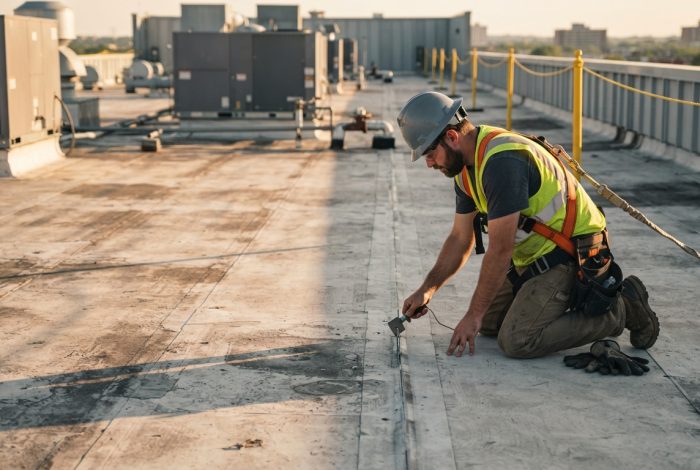
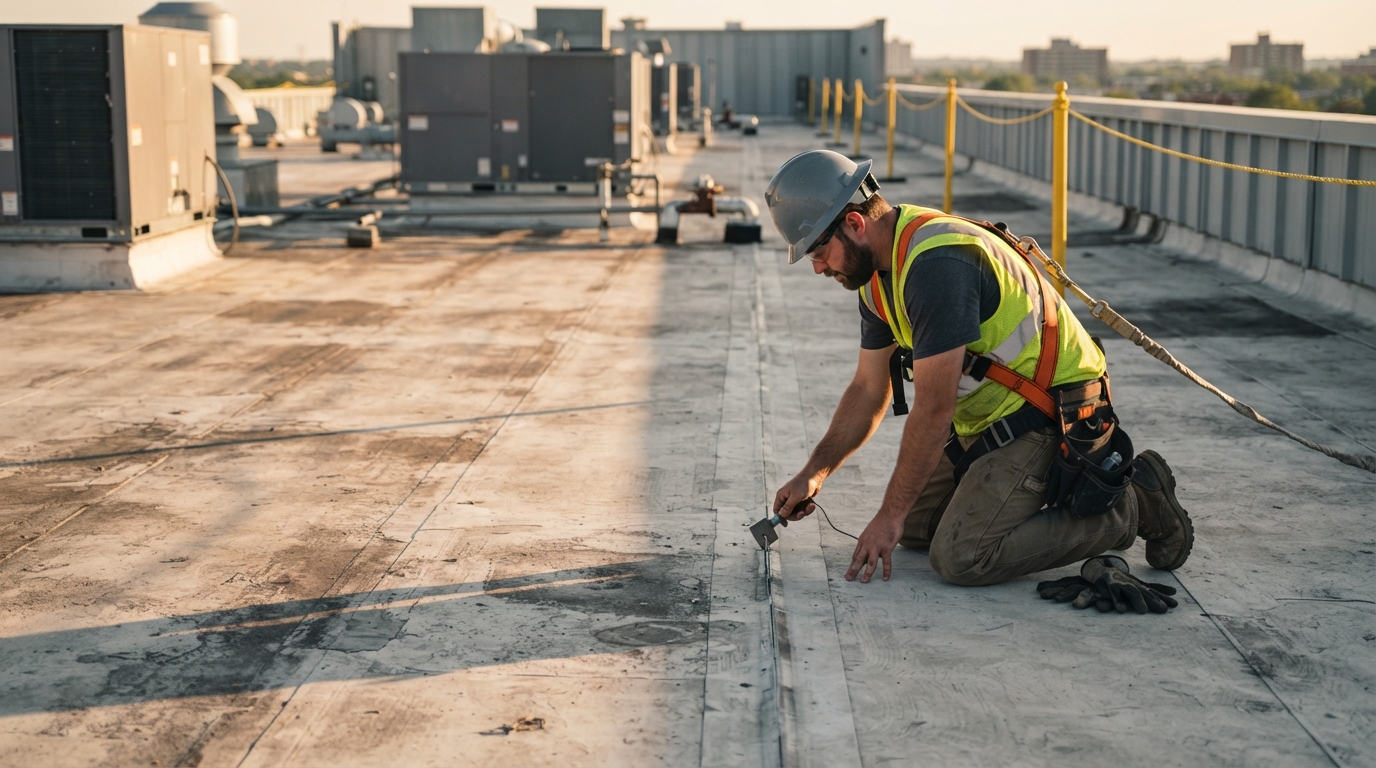
Any contractor working on an elevated commercial roof must follow federal workplace safety standards during repair work. Under 29 CFR 1926.501, employees engaged in roofing activities on low-slope roofs with unprotected edges six feet or more above lower levels must be protected by guardrail systems, safety net systems, personal fall arrest systems, or a combination of a warning line system with one of those methods. These requirements shape how repair crews schedule and sequence work on multi-story commercial buildings, particularly around roof edges, hatches, and skylights.
Step Four: Execution, Documentation, and Walkthrough
The final phase of the repair process includes the physical work itself, followed by documentation and a closing walkthrough.
- Repair crews address the identified damage using matched materials and proper sealing techniques.
- Technicians document the work performed, often with before-and-after photos.
- A final walkthrough confirms the repair addresses the original leak or damage source.
- Property owners receive a record of the work for insurance or maintenance files.
Based in Daytona Beach, FL, repair teams serving the broader area, including Ormond Beach, FL, coordinate this documentation step so building owners have a clear record for future reference or warranty claims.
Frequently Asked Questions
How long does a typical commercial roof repair take? Timelines vary based on roof size, damage extent, and weather conditions, though localized repairs such as patching or flashing fixes are often completed within one to a few days once materials are matched.
What causes most commercial roof leaks? Ponding water, deteriorated flashing, seam separation, and punctures from foot traffic or debris are among the most frequent causes on flat and low-slope commercial roofs.
Does commercial roof repair differ from residential repair? Yes. Commercial roofs are typically flat or low-slope and use membrane systems like TPO or EPDM, which require different diagnostic and repair techniques than the shingled, pitched roofs common on homes.
When should a property owner choose repair over full replacement? Repair is generally appropriate when damage is localized and the roofing membrane has not reached the end of its service life; widespread deterioration across multiple roof sections often signals that replacement is the more practical option.
Next Steps for Property Owners
Current listing information for White Ibis Restoration is available for property owners researching commercial roofing options in the area.
The commercial roof repair process involves distinct phases, from inspection through documentation, each shaped by the specific roofing system and safety standards in place. Property owners who understand this sequence are better positioned to evaluate repair proposals and track the condition of their roofing systems over time.