
Summary:
- Landscaping mulch retains soil moisture, suppresses weeds, and moderates soil temperature for healthier plant beds.
- A 2-4 inch layer applied correctly protects roots without restricting water flow or trapping excess moisture against stems.
- Homeowners in North Branford, CT can match mulch type and depth to seasonal moisture swings and local soil conditions.
Landscaping mulch is a layer of organic or inorganic material spread over soil to reduce water loss, block weed growth, and stabilize temperature around plant roots. Applied correctly, it reduces maintenance time and supports stronger root systems through changing seasons.
Why Mulch Matters for Soil and Plant Health
Mulch does more than finish the look of a garden bed. According to EPA WaterSense guidance, mulch adds a protective layer between plant roots and open air, which helps plants retain moisture and resist stress during dry stretches. For homeowners weighing options, landscaping mulch remains one of the most direct ways to improve bed performance without reworking an entire landscape design.
The benefits extend beyond moisture control. A properly mulched bed experiences less soil erosion during heavy rain, fewer weed seedlings competing for nutrients, and more stable root-zone temperatures across spring freezes and summer heat waves. These factors matter directly to anyone maintaining a yard in North Branford, CT, where seasonal temperature swings and intermittent heavy rainfall put extra demand on garden beds.
Key functions of mulch:
- Slows evaporation so soil holds water longer between waterings
- Suppresses weed germination by blocking sunlight at the soil surface
- Moderates soil temperature, protecting roots from frost and heat stress
- Reduces erosion on sloped or exposed beds during storms
How to Apply Mulch Correctly
Depth and placement determine whether mulch helps or harms a landscape bed. The EPA’s water-smart landscaping guidance notes that applying mulch to a depth of three to four inches provides adequate coverage for most plants, while excessive depth can restrict water flow to roots.
Follow these steps for a durable application:
- Clear the bed of weeds and debris before spreading mulch.
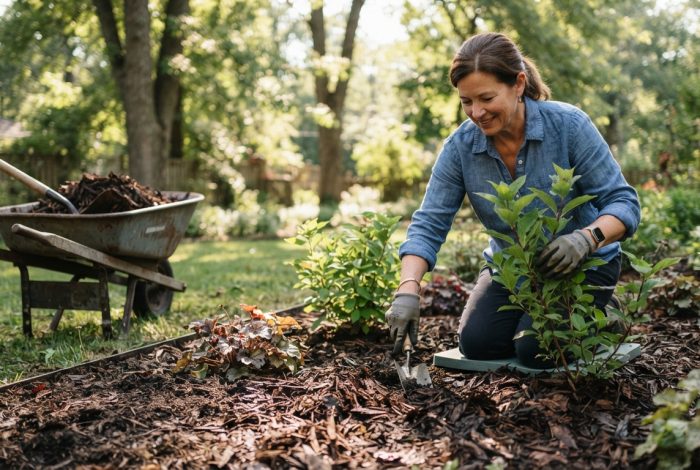
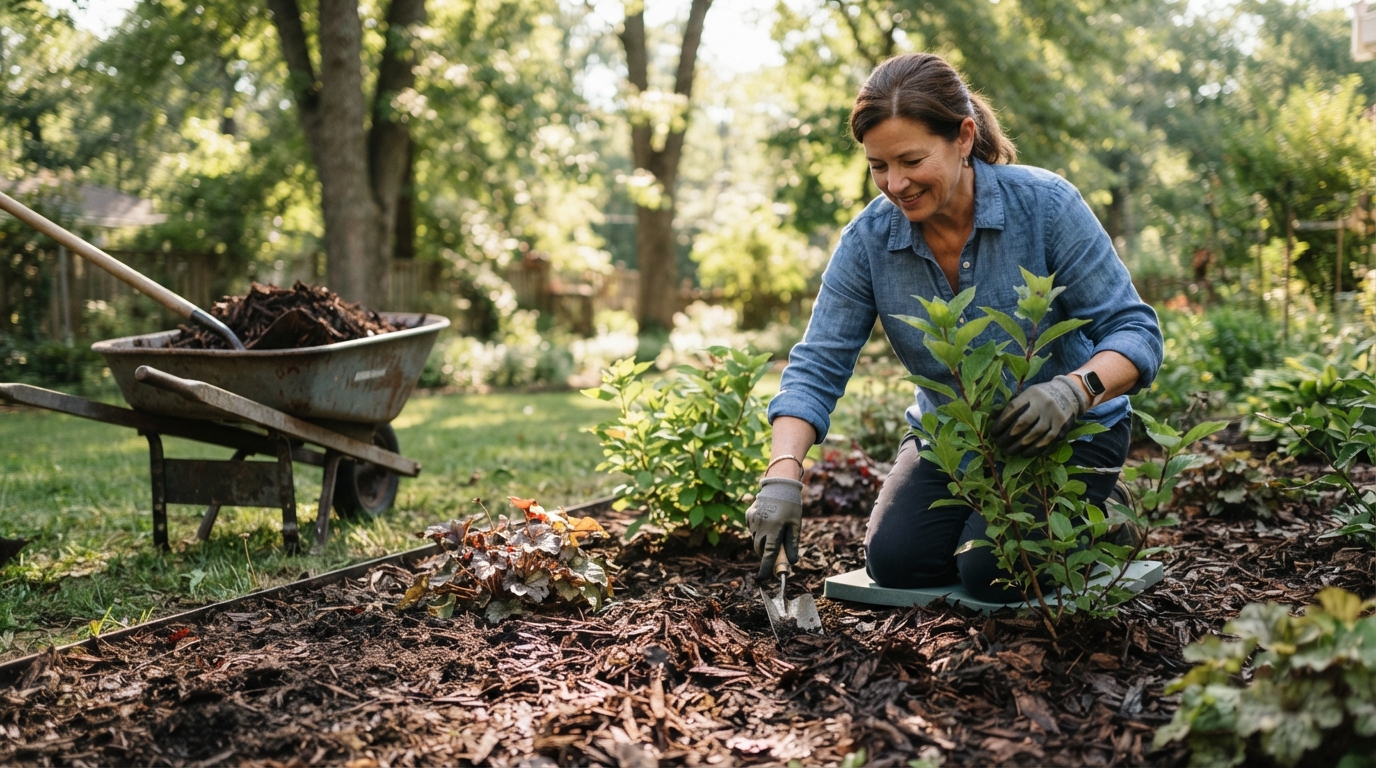
- Apply a layer two to four inches deep, keeping mulch away from direct contact with stems and trunks.
- Rake the surface level to avoid pooling water in low spots.
- Re-mulch annually or as the layer breaks down and thins.
- Check moisture beneath the mulch periodically rather than assuming coverage alone is sufficient.
Avoid piling mulch against tree trunks or shrub stems, a practice sometimes called “volcano mulching.” This traps moisture against bark, inviting rot and pest activity rather than protecting the plant.
Choosing the Right Mulch Type
Different mulch materials serve different goals, from moisture retention to long-term soil enrichment. The table below compares common options by durability, appearance, and primary benefit.
| Mulch Type | Typical Lifespan | Primary Benefit | Best Use Case |
| Shredded bark | 1-2 years | Moisture retention, natural look | Garden beds, foundation plantings |
| Dyed or colored mulch | 1-2 years | Consistent color, weed suppression | Front-yard beds, high-visibility areas |
| Organic compost-blend mulch | 1 year | Soil enrichment, nutrient boost | Vegetable gardens, perennial beds |
| Playground-grade mulch | 2-3 years | Impact cushioning, durability | Play areas, high-traffic zones |
Selecting a mulch type depends on the bed’s purpose, sun exposure, and how often the area gets refreshed. Beds near walkways or driveways in North Branford, CT often benefit from denser, slower-breaking-down mulch that holds its shape through freeze-thaw cycles.
Frequently Asked Questions
How often should mulch be replaced? Most organic mulch breaks down within one to two years and should be refreshed annually to maintain full weed suppression and moisture retention benefits, consistent with EPA maintenance guidance.
Can too much mulch damage plants? Yes. Layers thicker than four inches can restrict water and oxygen flow to roots, so moderate depth works better than heavy piling.
Does mulch color affect plant health? Color is largely cosmetic and does not significantly change moisture retention or weed suppression, though lighter colors may reflect more heat in full-sun beds.
Is mulch necessary for every type of garden bed? Beds with dense ground cover or turf may need less mulch, but exposed soil around shrubs, trees, and perennials generally benefits from a consistent mulch layer.
Local Context and Final Notes
Based in Hamden, CT, Modern Materials Corporation serves customers across North Branford, CT.
Current availability details for Learn more about landscaping mulch are published for the local service area.