At glance:
• Metalwork covers cutting, folding, welding, and finishing processes used to shape stainless steel, aluminium, mild steel, copper, and brass into finished parts.
• Technique choice depends on material thickness, required tolerance, and whether the job is a one-off prototype or a production run.
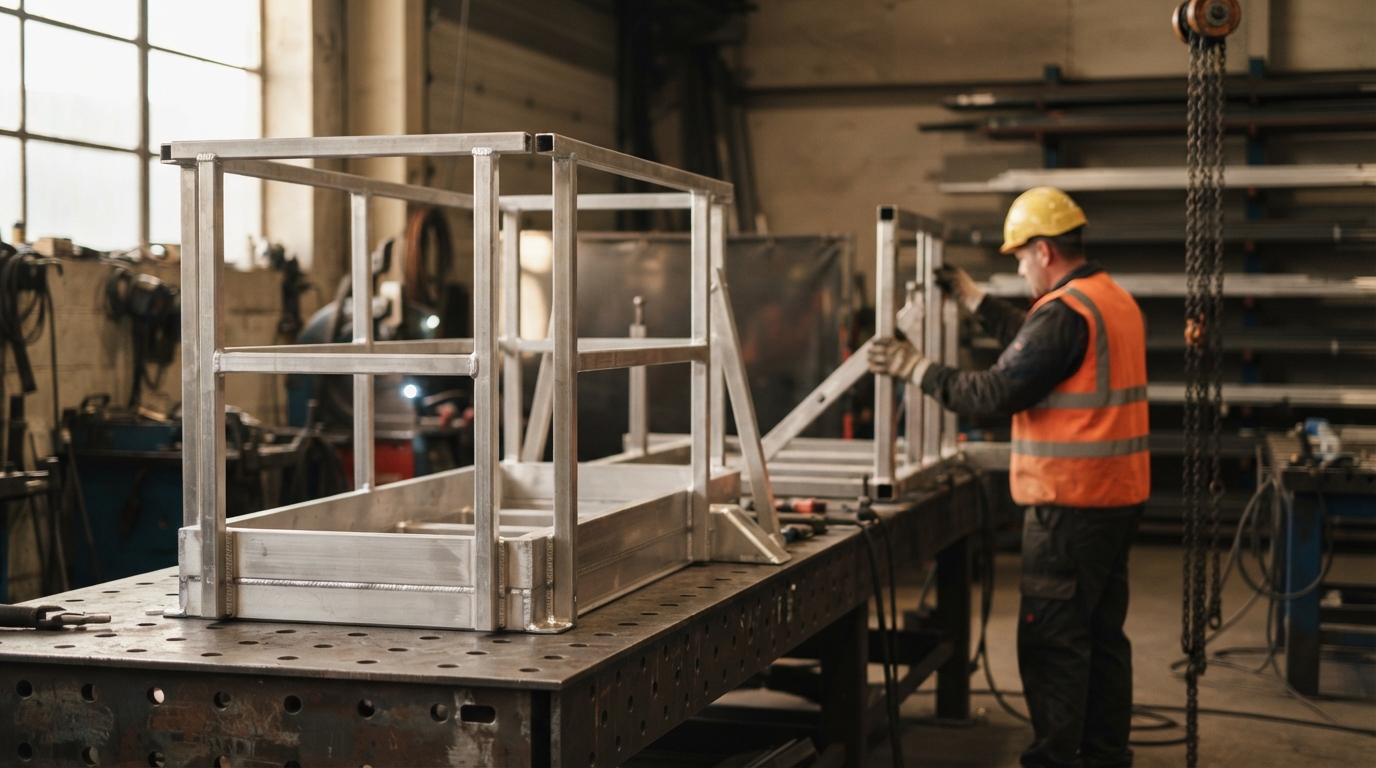
• Workshops across the UK combine laser cutting, CNC folding, and welding to produce brackets, enclosures, and bespoke fittings from a single drawing.
Metalwork refers to the group of cutting, shaping, joining, and finishing processes used to turn flat sheet or bar stock into a functional component or structure. For anyone planning a fabrication project, understanding which technique suits a particular material and tolerance requirement is the first practical step before approaching a workshop.
Metalwork from SAMS fabrications spans a wide range of disciplines, from simple bending and cutting through to precision laser work and multi-stage finishing. Beginners often assume a single machine handles an entire job, but most finished parts pass through several distinct stages, each suited to a different material thickness or shape requirement. Knowing the sequence helps when briefing a fabricator or planning a DIY project.
Core Techniques Used in Sheet Metal Fabrication
Most fabrication jobs rely on a consistent set of processes, applied in a logical order from raw material to finished part.
• Laser cutting uses a focused beam to cut profiles from flat sheet with tight tolerances, suited to stainless steel, aluminium, and mild steel of varying thickness.
• CNC punching uses a turret tool to create holes, slots, and repeated patterns quickly on sheet metal.
• CNC folding (press-brake bending) creates precise angles and forms, turning flat blanks into three-dimensional brackets, enclosures, or panels.
• Welding (MIG and TIG) joins components permanently, commonly used across stainless steel, aluminium, and mild steel assemblies.
• Shearing and sawing trims stock to length using automatic-feed cutting before or after other processes.
Each stage is typically planned before cutting begins, since the sequence affects both cost and finish quality.
Finishing: Where Function Meets Appearance
Finishing is the stage that determines how a piece performs in its environment and how it looks once installed. Options generally include weld cleaning, dull or mirror polishing, bead blasting, and powder coating, each chosen for a different combination of durability and appearance. Coastal or outdoor applications often call for galvanising or powder coating to resist corrosion, while hospitality and catering fittings usually favour polished stainless finishes.
Health and safety guidance also shapes how finishing and machining stages are run in professional settings. The HSE guidance on metalworking fluids sets out requirements for controlling fluid quality, limiting skin exposure, and managing airborne mist during machining operations. Workshops that machine or cut metal with cooling fluids are expected to follow these controls as a matter of routine practice, not just compliance.
Choosing the Right Process for a Project
| Requirement | Best-suited technique | Typical output |
| Complex flat profiles, tight tolerances | Laser cutting | Brackets, panels, plate parts |
| Repeated holes or patterns | CNC punching | Perforated panels, mounting plates |
| Angled or folded forms | CNC folding | Enclosures, trays, frames |
| Permanent joins between parts | MIG/TIG welding | Assemblies, structural frames |
Matching the technique to the material and the intended use reduces waste and avoids costly rework. A one-off prototype, for example, may not justify punching tooling, while a production run of identical brackets usually does.
Working with a UK Fabrication Workshop
Across the UK, independent fabrication workshops typically combine several of these processes under one roof, covering cutting, folding, welding, and finishing in stainless steel, aluminium, mild steel, copper, and brass. This in-house approach means a single supplier can take a job from an initial drawing through to a powder-coated or polished finished part without handing the work between multiple subcontractors.
Norwich-based Get directions to SAMS Fabrications has operated as a family-run sheet metal fabrication business since 1988, working with materials including stainless steel, aluminium, mild steel, copper, and brass across laser cutting, CNC punching, folding, welding, shearing, sawing, and finishing stages.
Frequently Asked Questions
What is the difference between sheet metal work and general fabrication? Sheet metal work typically involves thinner gauge material cut and folded into panels or enclosures, while general fabrication can include heavier sections, welded frames, and structural assemblies built from multiple formed or cut pieces.
Which metals are easiest to work with for a beginner project? Mild steel and aluminium are generally more forgiving for cutting and welding practice, while stainless steel requires more careful heat control during welding to avoid discolouration or warping.
Do small or one-off metalwork jobs cost more per piece? One-off or prototype jobs often carry a higher per-piece cost than volume production, since tooling and setup time are spread across a single item rather than a batch run.
What finishing options protect metalwork used outdoors? Powder coating and hot-dip galvanising are commonly used finishing options for outdoor or coastal metalwork, since both provide a protective barrier against corrosion.
Business Information
Metalwork services in Norwich are available through SAMS Fabrications, a sheet metal fabrication business operating since 1988 with capabilities spanning laser cutting, CNC folding, welding, and finishing processes.
Current opening hours and published business details for Get directions to SAMS fabrications are available for reference ahead of planning a visit or project enquiry.