
Recap:
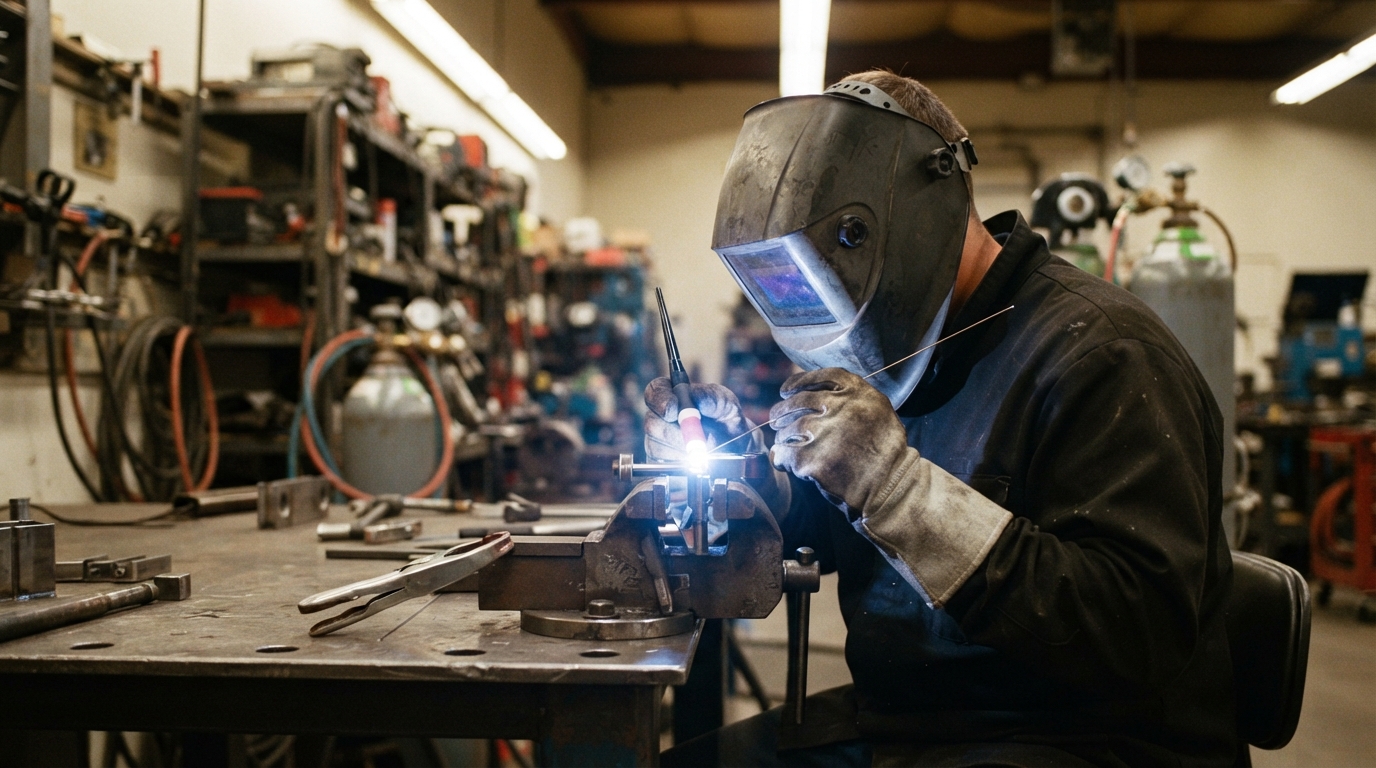
• TIG (GTAW) welding uses a non-consumable tungsten electrode and inert shielding gas to produce precise, high-quality welds on thin or delicate materials.
• Applications range from medical device components and mold work to industrial parts and firearm components.
• Service providers in the USA typically support both standard and microscopic TIG welding for production, prototyping, and repair work.
TIG welding services use tungsten inert gas arc welding, also called GTAW, to join metals with tight heat control and minimal distortion, making the process suited to thin materials, small components, and applications where weld appearance and precision matter most.
Manufacturers across medical device, mold, and industrial sectors rely on Tig Welding Services when a project demands clean, slag-free joints and close control over heat input. The process uses a non-consumable tungsten electrode paired with shielding gas, which keeps the weld pool protected from atmospheric contamination during the arc. This level of control is one reason TIG is frequently chosen over other arc welding methods for critical or heat-sensitive parts.
How the TIG Welding Process Works
GTAW relies on a few core components working together to produce a controlled weld. A typical TIG welding system includes a welding torch, a cooling system, the constant-current power supply, the inert gas, and a delivery system for the inert gas. The shielding gas plays a protective role throughout the weld. The shielding gases protect the welding area from atmospheric gases such as nitrogen and oxygen which may cause fusion defects, porosity, and weld metal embrittlement.
Operator skill has a direct effect on weld quality because TIG requires managing several variables at once.
• Current and voltage settings that control heat input
• Polarity and frequency adjustments specific to the base metal
• Manual feeding of filler rod when added material is needed
• Torch angle and travel speed to maintain a stable arc
To perform a TIG process, the operator must determine appropriate operational parameters such as current, voltage, polarity, and frequency, making it more complex than some other welding processes. This complexity is part of why experienced technicians are often preferred for precision work.
Common Applications Across Industries
TIG welding supports a wide range of materials and part types, which is why it remains common across several manufacturing sectors.
|
Application Area |
Typical Use Case |
Material Considerations |
|
Medical devices |
Small, heat-sensitive component joining |
Stainless steel, titanium |
|
Mold and die work |
Repairs and revisions on production tooling |
Tool steels |
|
Industrial components |
Shaft repair, couplers, general fabrication |
Steel, aluminum alloys |
|
Firearm components |
Licensed repair and manufacturing welds |
Steel alloys |
Within these sectors, TIG welding is valued for joining a broad range of metals. Production of extremely clean, strong and slag-free welds, applicability to almost all metals including stainless steels, aluminum, titanium, copper and nickel alloys, and total control by the operator are among its defining advantages. Weld quality on finished parts is typically checked against recognized acceptance criteria. Various standards identify levels of acceptability of imperfections in fusion-welded joints, such as those used during nondestructive testing.
Facilities providing this work in the USA generally support both standard-scale TIG welding and microscopic variations for parts measured in thousandths of an inch, which is relevant for medical and precision-machined assemblies.
Shop Safety and Quality Considerations
Any facility performing GTAW work follows safety protocols tied to the equipment and materials involved. OSHA requires PPE and ventilation for GTAW to minimize exposure to ultraviolet radiation and hazardous fumes. Tungsten electrode handling also falls under specific guidance. OSHA requires proper tungsten electrode handling and grinding procedures to prevent contamination and exposure to hazardous particles.
For buyers evaluating a shop, a few practical questions help clarify fit:
1. Does the provider support both production runs and one-off prototype parts.
2. What material thicknesses and alloys has the shop welded previously.
3. Are microscopic or small-scale welds part of the standard capability.
4. What turnaround time applies to repair versus new production work.
Reviewing these points against documented capabilities, such as those published by the OSHA welding and hot work standards, can help set realistic expectations before a project begins.
Frequently Asked Questions
What makes TIG welding different from MIG welding? TIG welding uses a non-consumable tungsten electrode and typically requires the operator to feed filler rod manually, while MIG welding uses a continuously fed consumable wire electrode. TIG generally offers finer control, which suits thin or delicate materials.
Can TIG welding join dissimilar metals? TIG welding can join certain dissimilar metal combinations depending on alloy compatibility and heat sensitivity, though this depends on the specific materials and project requirements.
Is TIG welding suitable for small or delicate parts? Yes. Microscopic TIG welding techniques are used for small, heat-sensitive components where standard-scale welding would risk distortion or damage.
Where is TIG welding commonly performed in the USA? TIG welding services are available through specialized shops across the USA, serving medical device, mold, industrial, and firearm component manufacturing needs.
Business Info: Micro Weld, Inc provides TIG and micro TIG welding services supporting medical device, mold, and industrial applications. Find out more about tig welding services outlines the published process details and service scope for this work.
Next Steps
Published process details for Find out more about tig welding services are available for readers researching GTAW capabilities further.
TIG welding remains a dependable choice for projects requiring precise, controlled welds across a range of metals and part sizes, and understanding its process, applications, and safety requirements helps manufacturers set realistic expectations before starting a project.