
Simply put:
• Commercial duct cleaning removes dust, debris, and contaminants from HVAC systems to support indoor air quality and equipment performance.
• Industry guidance from NADCA and the EPA shapes when and how cleaning should be performed in office and commercial buildings.
• Facilities in Omaha, NE can reference national standards and locally available providers when evaluating service needs.
Commercial duct cleaning refers to the mechanical removal of dust, debris, and microbial growth from the ductwork and related components of a building’s HVAC system. For facility managers weighing whether a cleaning service is worthwhile, the decision typically comes down to visible contamination, system performance, and occupant health concerns rather than a fixed calendar schedule.
Building owners researching Commercial Duct Cleaning in Omaha, NE often want to know what the service includes and when it becomes necessary for an office, retail space, or industrial facility. A dirty HVAC system does not just affect air quality; it can also strain equipment and increase operating costs over time.
When Commercial Facilities Should Consider Duct Cleaning
Federal guidance does not call for cleaning on a fixed schedule, but it identifies specific conditions that justify the service. According to EPA guidance on indoor air quality, duct cleaning should be considered when ducts show substantial visible mold growth, are infested with insects or rodents, or are so clogged with debris that particles are being released into occupied spaces.
For Omaha, NE facilities, seasonal humidity swings and winter heating cycles can contribute to dust buildup and condensation-related concerns inside ductwork. Property managers should watch for:
• Visible dust or debris blowing from supply registers
• Musty odors when the HVAC system cycles on
• Uneven airflow or reduced heating and cooling performance
• Recent renovation or construction dust entering the system
What a Professional Cleaning Process Typically Involves
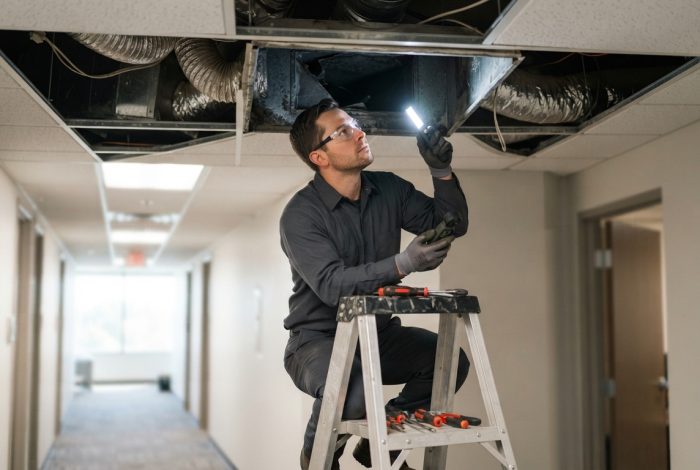
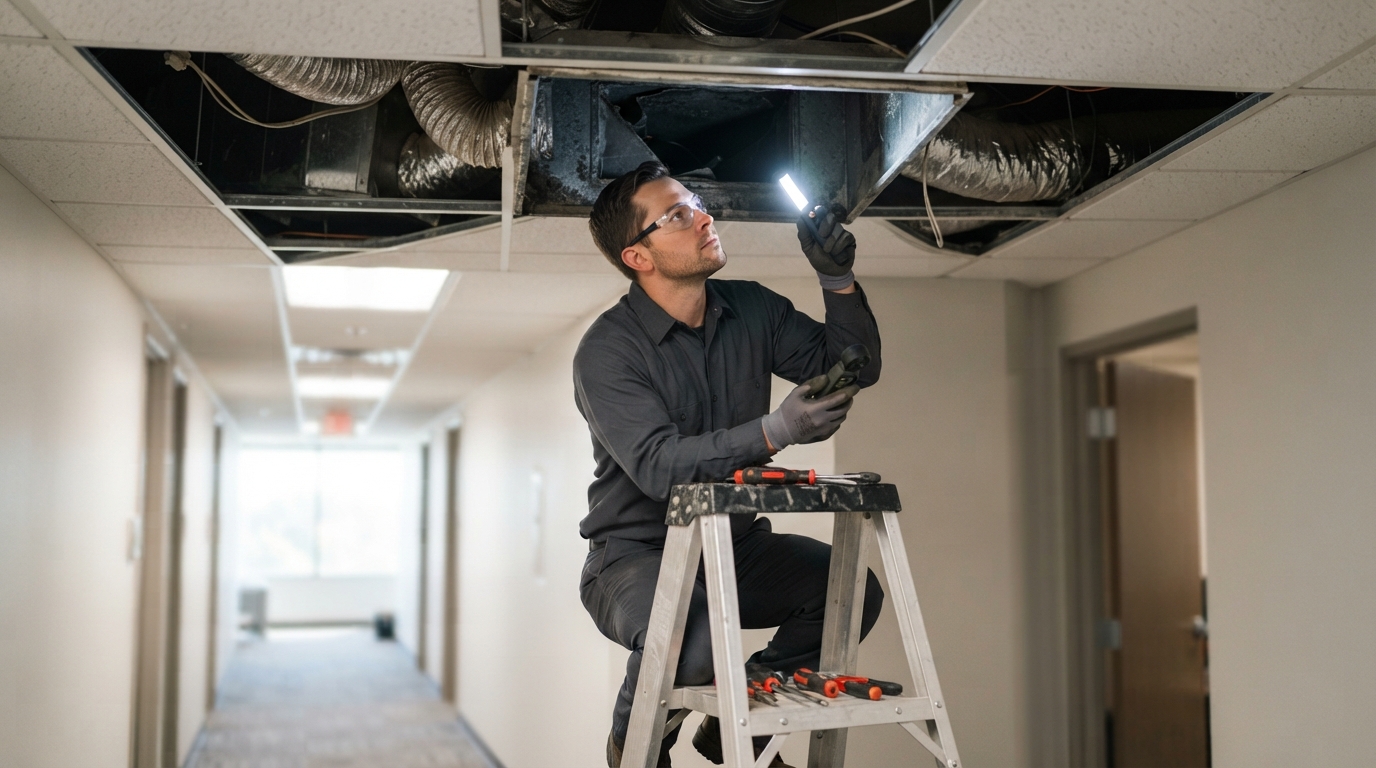
A thorough commercial cleaning addresses the entire air distribution system rather than isolated sections of duct. Guidance consistently points to cleaning all components connected to air handling, not just visible ductwork.
1. Inspection of supply and return ducts, grilles, diffusers, and coils
2. Use of vacuum collection equipment that exhausts outdoors or uses HEPA filtration
3. Removal of dust and debris so it does not re-enter occupied space
4. Verification that the system is visibly clean once work is complete
Technicians following these steps generally reference industry benchmarks such as those set by the National Air Duct Cleaners Association, which many commercial providers use to structure their cleaning scope and equipment standards.
Comparing Service Considerations for Commercial Properties
| Factor | Why It Matters for Commercial Buildings |
| System size and complexity | Larger ductwork networks require more time and specialized equipment |
| Contamination type | Mold, pests, or construction dust each require different handling |
| Occupant density | High-traffic spaces may benefit from closer monitoring of air quality |
| Maintenance history | Facilities without prior cleaning records may need a full system inspection first |
These factors influence scope and duration more than they dictate a fixed price, since every commercial HVAC system differs in layout and condition.
Business Information
DuctMedic Air Duct Cleaning lists commercial and residential air duct cleaning, dryer vent cleaning, and filter replacement among its published services. Based in USA, DuctMedic Air Duct Cleaning serves customers across Omaha, NE, according to its published Google Business Profile listing.
Frequently Asked Questions
Does the EPA require commercial duct cleaning on a set schedule? No. Federal guidance treats duct cleaning as an as-needed service tied to visible contamination, pest infestation, or heavy debris rather than a calendar-based requirement.
What parts of an HVAC system are cleaned during service? A complete cleaning covers supply and return ducts, registers, grilles, diffusers, coils, and the air handling unit, not just the visible duct runs.
Can dirty ducts affect energy costs in a commercial building? Buildup inside ductwork can restrict airflow and force HVAC equipment to work harder, which may influence utility costs, though the EPA notes this is not the primary justification for cleaning.
How often should Omaha, NE facilities check their ductwork? There is no fixed interval; inspections after renovations, seasonal HVAC transitions, or whenever contamination signs appear are the more reliable approach.
Readers can Visit DuctMedic Air Duct Cleaning to review available services, location details, and contact information.