Recap:
• Confirm licensing, insurance, warranty terms, and material options before signing any commercial roofing contract.
• Ask about project timeline, safety compliance, and documentation requirements specific to Richmond, VA commercial properties.
• Compare at least two written estimates that list the same scope of work before making a final decision.
Property owners researching a commercial roof contractor should prioritize contractors who provide written proof of licensing, insurance, and a documented safety program before any work begins. These questions reduce the risk of project delays, coverage disputes, and unexpected costs on commercial buildings.
Commercial roofing contracts involve larger scopes of work, longer timelines, and higher costs than residential jobs, so a signed agreement deserves scrutiny. Before approving any proposal, business owners can use a commercial roof contractor checklist to confirm licensing, material compatibility, and warranty terms match the property’s needs. Richmond, VA commercial buildings face distinct climate stress from humidity, freeze-thaw cycles, and summer storms, which makes contract clarity especially important.
What Licensing and Insurance Should a Contractor Show
A commercial roofing contractor working in Virginia should hold a Class A contractor license, since this classification permits unlimited project size and value. Before signing, ask for:
• Proof of current Class A licensing valid in Virginia
• General liability insurance certificates naming the property owner
• Workers’ compensation coverage documentation
• References from recent commercial projects of similar scope
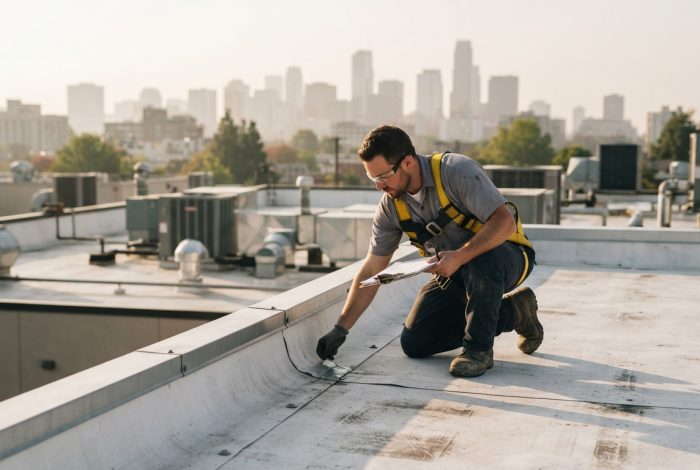
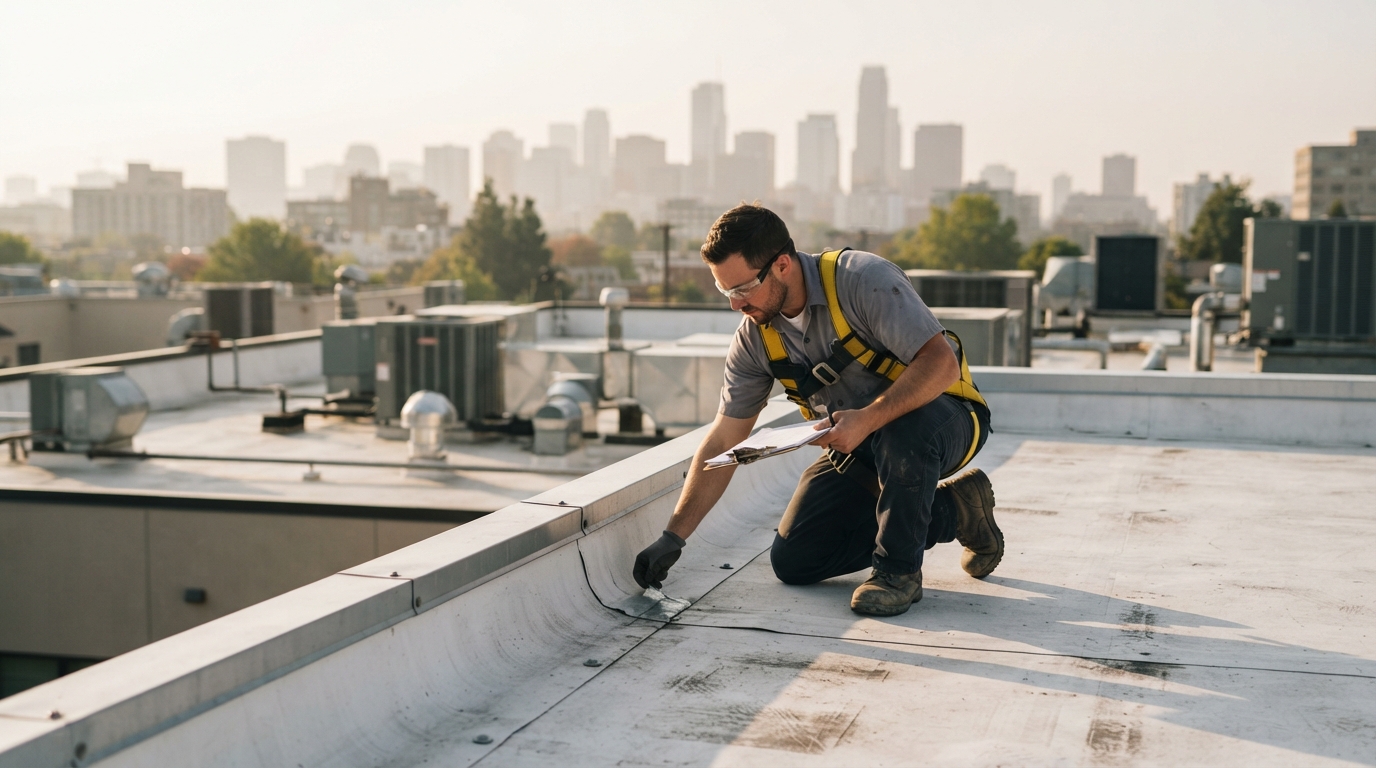
Commercial roof work also falls under federal workplace safety rules. Under OSHA fall protection standards, fall protection is required for most elevated roof work since commercial roofs typically exceed the six-foot threshold that triggers guardrail, safety-net, or personal fall-arrest system requirements. Requesting documentation of a written fall protection plan before signing confirms the contractor accounts for these obligations in the project cost.
Material and System Questions Worth Asking
Commercial roofing systems differ from residential shingles in both material and installation method. A contractor should explain which systems fit the building’s structure, drainage, and budget.
| Roofing System | Typical Use | Key Consideration |
| TPO | Flat/low-slope commercial roofs | Reflective, popular for energy efficiency |
| EPDM | Flat roofs, rubber membrane | Durable in temperature swings |
| Metal | Sloped or flat commercial roofs | Longer lifespan, higher upfront cost |
| Modified bitumen | Low-slope roofs | Multi-layer protection |
Ask the contractor to specify which system is recommended for the building and why, rather than accepting a single default option. A written estimate should also break down whether the quote covers installation, replacement, or repair, since these scopes carry different costs and warranty terms.
Questions About Timeline, Warranty, and Documentation
Before signing, clarify how weather delays, change orders, and warranty claims will be handled in writing.
1. What is the estimated start date and completion window?
2. Does the warranty cover materials, workmanship, or both, and for how long?
3. Who is responsible for filing manufacturer warranty registration?
4. How are change orders priced if unexpected roof damage is found mid-project?
5. What cleanup and disposal process applies after tear-off?
A contractor should walk through warranty documentation in plain language before any deposit is collected. If storm damage or an insurance claim is involved, ask whether the contractor provides the inspection photos and estimates insurers typically require.
Comparing Estimates Before You Decide
Two estimates covering the same roofing system can differ significantly once scope, material grade, and labor details are itemized. Request that every bid break down tear-off, decking repair, underlayment, membrane or shingle material, and flashing work as separate line items. This makes it possible to compare quotes on equal terms rather than by total price alone.
Based in Glen Allen, VA, the business providing these services serves commercial and residential customers throughout Richmond, VA. Readers evaluating a proposal for a commercial building in the area can apply the same licensing, insurance, and documentation questions regardless of which contractor is under consideration.
Frequently Asked Questions
How long does a typical commercial roof installation take? Timelines depend on building size, roof system, and weather, so a written estimate should include a projected start and completion window rather than a vague timeframe.
Should a commercial roof contract include a written warranty? Yes. A clear agreement should separate manufacturer material warranties from the contractor’s workmanship warranty, including the length of coverage for each.
What documents prove a contractor is qualified for commercial work? A Class A contractor license, current liability insurance, workers’ compensation coverage, and a written fall protection plan are standard documentation to request before signing.
Can a contractor help with an insurance claim after storm damage? Many contractors provide inspection photos and repair estimates that insurers typically request, though the property owner remains responsible for filing the claim itself.
Reviewing licensing requirements, warranty terms, and project documentation before signing helps commercial property owners avoid potential disputes once work begins. Property owners in Richmond, VA, can find additional service area information by visiting Learn More about Commercial Roofing Services.